

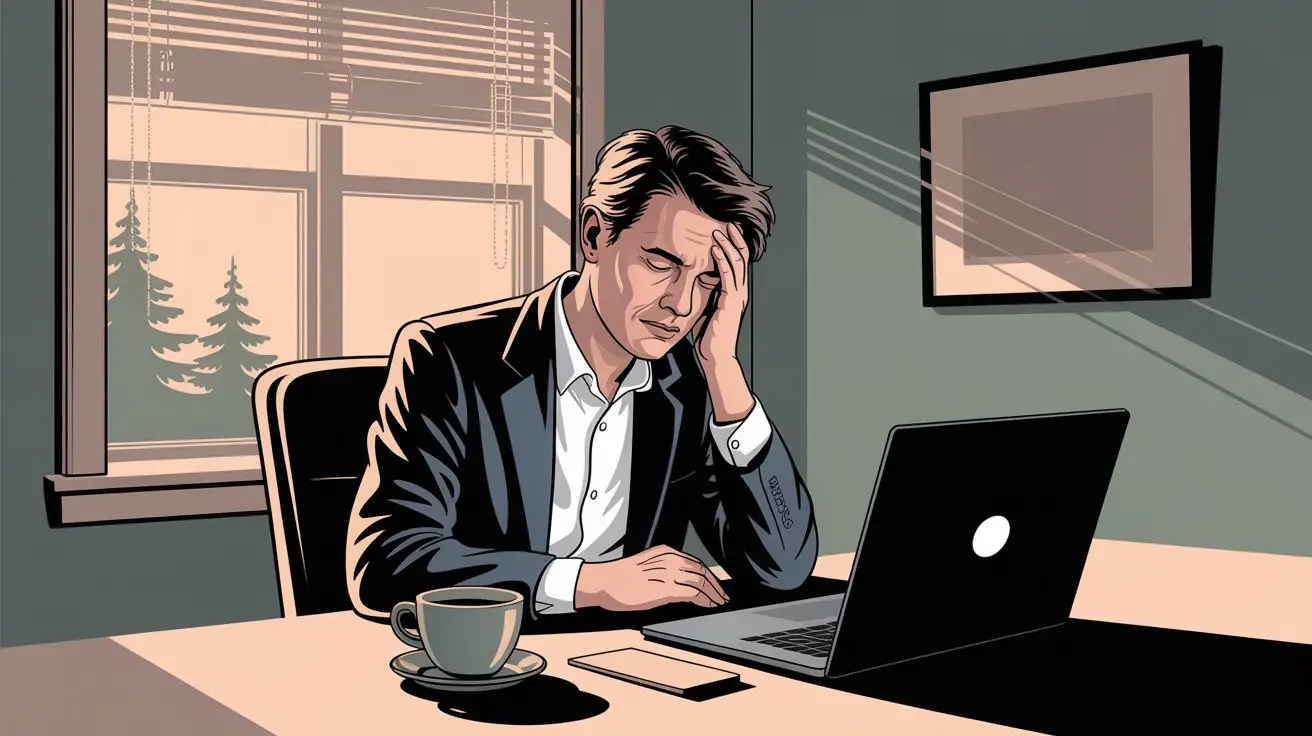
TL;DR: Burnout and busyness feel similar on the surface — both involve exhaustion and overload. But burnout has five distinct markers that don’t resolve with rest: persistent exhaustion, emotional flatness or irritability, declining performance despite more effort, social withdrawal, and physical symptoms that linger. If three or more of these sound familiar, it’s worth treating this as burnout, not just a hectic patch.
In Saskatchewan’s boardrooms, back offices, and founder-led startups, one phrase comes up again and again:
“I’m not burnt out — I’m just busy.”
And yes, leaders are busy. But there’s a quiet shift that happens when “busy” turns into burnout — and it rarely announces itself with flashing lights. Instead, it looks like tiredness that won’t lift, decisions that feel heavy, and days that blur together.
Burnout is now formally recognized by the World Health Organization as an occupational phenomenon — not a personality flaw, not a weakness, and not something you can push through indefinitely. It has a clinical profile. And it’s more common among high-performing professionals than most of them would like to admit.
Below, you’ll find five clear signs that what you’re carrying is burnout, not just a busy season — and what to do if they sound familiar.
What’s the difference between being busy and being burnt out?
Being busy is a workload problem. Burnout is a recovery problem.
When you’re busy, rest helps. When you’re burnt out, rest stops working — and that distinction matters more than how many hours you’re logging.
1. Are you exhausted even when you slow down?
If you’re just busy, you feel tired at the end of the week — but sleep, a weekend, or a short break helps you bounce back.
When you’re burnt out, the exhaustion is different:
- You wake up feeling heavy, even after a full night’s sleep.
- Weekends or vacations don’t feel restorative.
- Your body feels like it’s running on a “low-battery” setting all the time.
Busy says: “I need a day off.” Burnout says: “I need a complete reset.”
If slowing down doesn’t lighten the load, it’s not just a busy patch — it’s a signal your system is giving you.
2. Does everything feel flat — or does everything feel like too much?
Burnout often shows up emotionally in one of two ways: numbness or irritability.
You might notice:
- Cynicism or detachment toward work that used to feel meaningful.
- Little to no motivation, even for tasks you normally enjoy.
- A shorter fuse with colleagues, clients, or family — and then guilt about it.
Inside, you’re either shut down (“I just don’t care anymore”) or overwhelmed (“Everything is too much, all at once”) — sometimes both, on the same afternoon.
Busy says: “I’m stretched.” Burnout says: “I’m numb” — or — “I’m snapping.”
If your emotional baseline has shifted and isn’t shifting back, burnout is likely in the picture.
3. Are you working harder but getting worse results?
When you’re busy, you can still see clear progress even when you’re tired.
Burnout changes that:
- You’re putting in more hours, but producing fewer meaningful outcomes.
- You struggle to focus, make small mistakes, or miss deadlines you’d normally hit.
- You feel foggy, indecisive, or like you’re watching yourself lead from a distance.
Leaders often mislabel this as poor discipline or bad time management. In reality, it reflects what happens when the brain’s prefrontal cortex — the seat of planning, decision-making, and focus — is running on empty. The brain isn’t lazy. It’s overdrawn.
Busy says: “I need to be more efficient.” Burnout says: “I can’t think straight no matter how hard I try.”
If effort is climbing while output is slipping, that gap is worth taking seriously.
4. Are you pulling back from people and things you used to enjoy?
Burnout often shows up as withdrawal — and it’s easy to mistake for introversion or needing downtime.
You might notice:
- Avoiding meetings, calls, or social events you used to look forward to.
- Cancelling plans with friends or family because you’re “too tired” — consistently.
- Feeling like being on for other people is just one more demand you can’t meet.
- Stepping back from hobbies or activities that used to recharge you.
This isn’t selfishness. In burnout, withdrawal is the nervous system’s attempt to conserve resources. It’s protective — until it becomes isolating.
Busy says: “I need some quiet time.” Burnout says: “I can’t be around anyone right now.”
If you’re defaulting to “no” for almost everything, it’s worth asking whether that’s preference — or exhaustion running the show.
5. Is your body sending warning signals?
Burnout doesn’t just live in your mind — it lives in your body. Chronic workplace stress activates the body’s stress-response systems over time, and the physical symptoms that follow are real, not psychosomatic.
You might notice:
- Frequent headaches, stomach issues, or persistent muscle tension.
- Sleep disruption — trouble falling asleep, waking early, or needing more sleep but still feeling unrefreshed.
- Changes in appetite, energy levels, or a growing reliance on caffeine, sugar, or late-night work sessions just to function.
These can look like “just stress.” When they persist for weeks or months — and coincide with the other signs above — they’re usually part of a larger burnout picture.
Busy says: “I’ve been run down lately.” Burnout says: “My body hasn’t felt normal in a long time.”
If your body feels like it’s constantly on high alert while your mind feels drained, that’s not just a busy season.
Busy vs. burnt out: at a glance
| Busy | Burnt out | |
|---|---|---|
| After rest | Feel better | Still exhausted |
| Emotions | Stretched but present | Numb or snapping |
| Work output | Tired but producing | Effort up, results down |
| Social connection | Need some quiet | Pulling back from most things |
| Body | Run down occasionally | Symptoms persist for weeks+ |
Quick self-check: is this burnout?
Ask yourself:
- Do you feel exhausted even after rest or a short break?
- Do you feel emotionally numb or unusually irritable most days?
- Are you working harder but getting worse results?
- Are you pulling back from people and activities you used to enjoy?
- Are you noticing physical symptoms — headaches, sleep disruption, persistent fatigue — that won’t resolve?
If three or more of these are familiar, treat this as burnout — not just a busy season.
This isn’t a personality flaw or a personal failure. It’s a signal that your system is overloaded and asking for a different kind of support.
Frequently asked questions
How do I know if I’m burnt out or just depressed? Burnout and depression share some features — low motivation, fatigue, withdrawal — but they’re distinct. Burnout is typically tied to a specific context (usually work) and tends to improve when the stressor is removed. Depression is more pervasive. Because the symptoms overlap, and because burnout can develop into depression over time, a professional assessment is the clearest way to tell them apart.
Can executives and founders get burnt out? Yes — and at higher rates than most people assume. High autonomy, constant decision-making, and the pressure to appear unshakeable are all burnout accelerants. The ability to keep performing despite exhaustion is often what makes burnout go unrecognized in leaders until it’s severe.
Is burnout reversible? Yes. Burnout is diagnosable, treatable, and reversible — especially when identified early. Recovery typically involves reducing and redistributing stressors, rebuilding recovery capacity, and sometimes working with a professional to address the patterns that led to burnout in the first place.
Where can I get help for burnout in Saskatchewan? STG Health Services offers confidential burnout recovery support for professionals and executives across Saskatchewan, including northern communities. Virtual appointments are available. Book a 15-minute discovery call →
What to do if this sounds like you
If these signs are showing up, pushing through is rarely the best long-term move.
Consider:
- Pausing to honestly assess your workload, boundaries, and recovery habits.
- Talking confidentially with a professional who understands burnout in high-achieving professionals — not just stress management generalities.
Burnout is diagnosable, treatable, and reversible. Executives and founders in Saskatchewan often worry about what seeking support means for how they’re perceived — but the right recovery plan is designed around your role and your life, not despite it.
Book your 15-minute discovery call
If three or more of these signs resonate, it’s worth exploring whether a structured burnout-recovery program is the right next step.
You don’t need to share your whole story in the first call. You don’t need a diagnosis on the spot. You just need a safe space to ask: “Is this burnout — and if so, what can I do about it?”
→ Schedule your confidential 15-minute discovery call
This is a low-risk, no-obligation conversation to see if burnout recovery is the right fit for you, your role, and your life in Saskatchewan.