In crisis? Call 911, HealthLine 8-1-1, or call/text 9-8-8 for suicide crisis support.

Structured ADHD care across Saskatchewan

The ADHD is real. What happens next can change.

Assessment, psychotherapy, skills training, group treatment, sleep care and parenting support—organized into a clear clinical pathway rather than another list of tips.

Start with direction

You do not need to know which service fits before you begin.

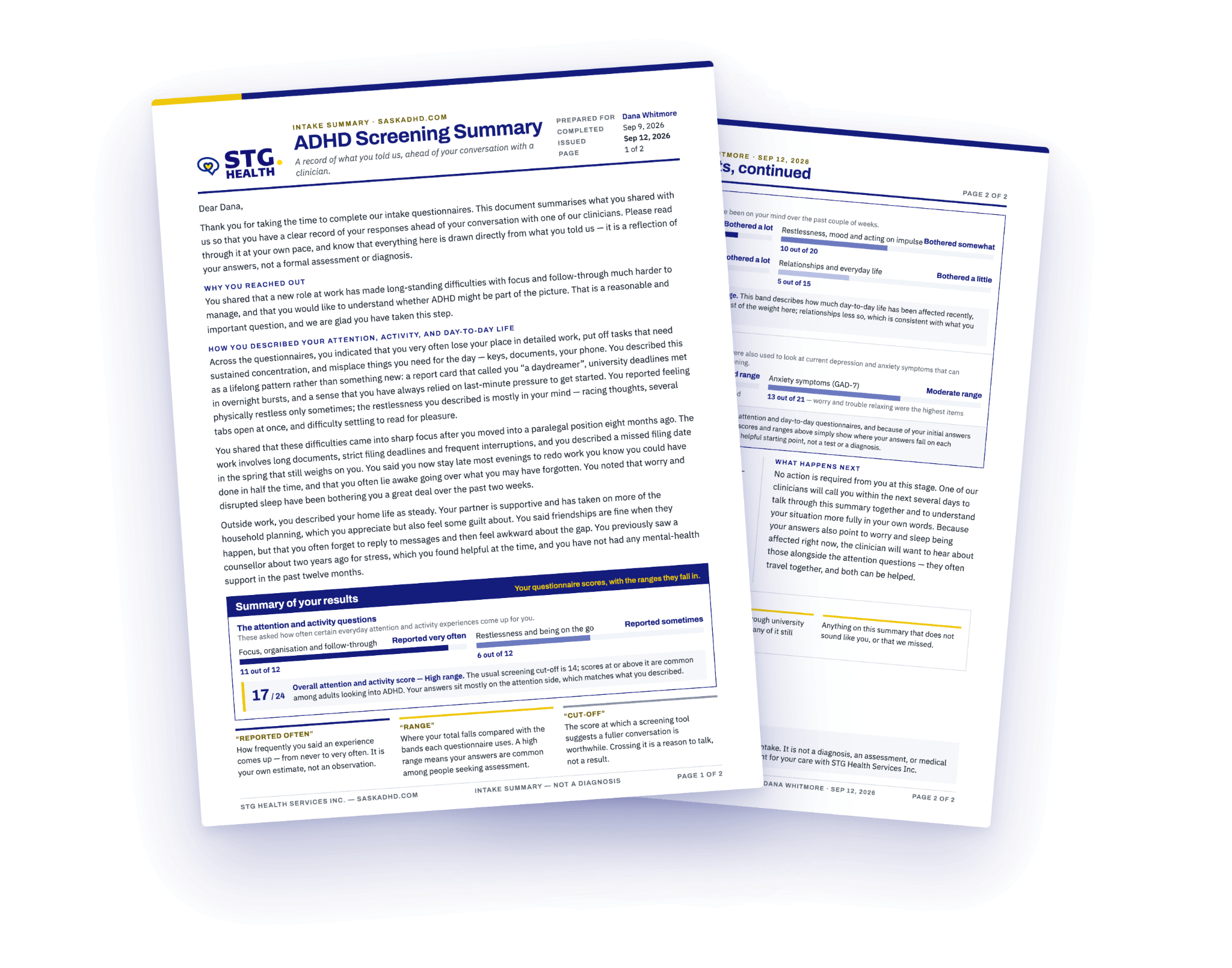
Complete the screening in about 10–15 minutes. A clinician reviews diagnosis status, current distress, safety and goals, then recommends assessment, group treatment, individual care or another first step.

✓ Dedicated clinician review—not an automated quiz
✓ Clear next-step recommendation
✓ NIHB may cover eligible First Nations clients
Dr. Chris de Feijter

Clinician-led ADHD care through STG Health

Assessment + treatment

Psychometrics, psychotherapy, skills and NP coordination

Private & confidential

Secure video appointments across Saskatchewan

$40 screening

Dedicated clinician review · no referral required

Recognition

ADHD becomes visible in the cost of ordinary life

The issue is rarely a lack of caring. It is the amount of effort required to organize attention, emotion, time and follow-through.

01

Tasks start only when urgency becomes unbearable

Important work is delayed until pressure finally produces enough activation.

02

Consistency collapses under real life

A system works briefly, then disappears when sleep, stress, caregiving or workload changes.

03

Emotion moves faster than reflection

Criticism, frustration or uncertainty can trigger reactions that take far longer to settle than expected.

04

Success requires hidden over-effort

Other people see competence while you see the recovery time, missed details and self-criticism behind it.

A clear pathway

Three stages, one coordinated system

Each stage answers a different question, so you are not pushed into treatment before the clinical picture is clear.

Stage 1

Screening and fit review

A clinician reviews your current pattern, risk, diagnosis status and goals, then identifies the safest and most useful entry point.

Stage 2

Assessment and intervention plan

When clarification is needed, structured psychometrics and clinical integration produce plain-language feedback and a written plan.

Stage 3

Treatment that reaches daily life

Choose individual psychotherapy, the Signal Group, ADHD skills work, sleep treatment, parenting support or coordinated medical care.

Why SaskADHD

Clinical care—not productivity theatre

The work combines careful assessment with practical methods that can survive ordinary weeks, not only ideal ones.

Clinical

Assessment before assumptions

Attention concerns are considered alongside anxiety, burnout, sleep, trauma, mood, medical factors and life context.

Practical

Skills tied to real pressure points

Sessions connect directly to task initiation, time blindness, emotional regulation, relationships, sleep and work demands.

Integrated

One plan across disciplines

Psychotherapy, psychometrics and nurse practitioner care can be coordinated when clinically indicated and consented to.

Choose your route

One clinic, structured ways in for every front

Begin with the question you are trying to answer.

Fees and coverage

Know the practical details before you commit

Psychotherapy uses an income-based rate. Assessment is billed by phase. Many extended health plans provide coverage, and eligible First Nations clients may access NIHB-funded care.

Before you decide

Questions that usually determine the first step

Do I need a confirmed ADHD diagnosis?

No. People with a confirmed diagnosis can enter treatment pathways, while people who are uncertain can begin with screening and assessment.

Is this ADHD coaching?

The service includes practical executive-function work, but it is delivered within clinical counselling, psychotherapy, assessment or structured treatment—not stand-alone performance coaching.

Can medication be discussed?

Yes. When indicated, an STG nurse practitioner can provide medical assessment and medication consultation. Bridge prescribing is limited and long-term care returns to an ongoing prescriber.

What happens after I submit the screening?

A clinician reviews fit, safety, current needs and available pathways, then contacts you with a recommendation or a request for only the information still needed.

A proportionate next step

Stop guessing which path you are supposed to choose.

The screening gives you a clinician-reviewed answer about assessment, treatment, group readiness or a safer first step.