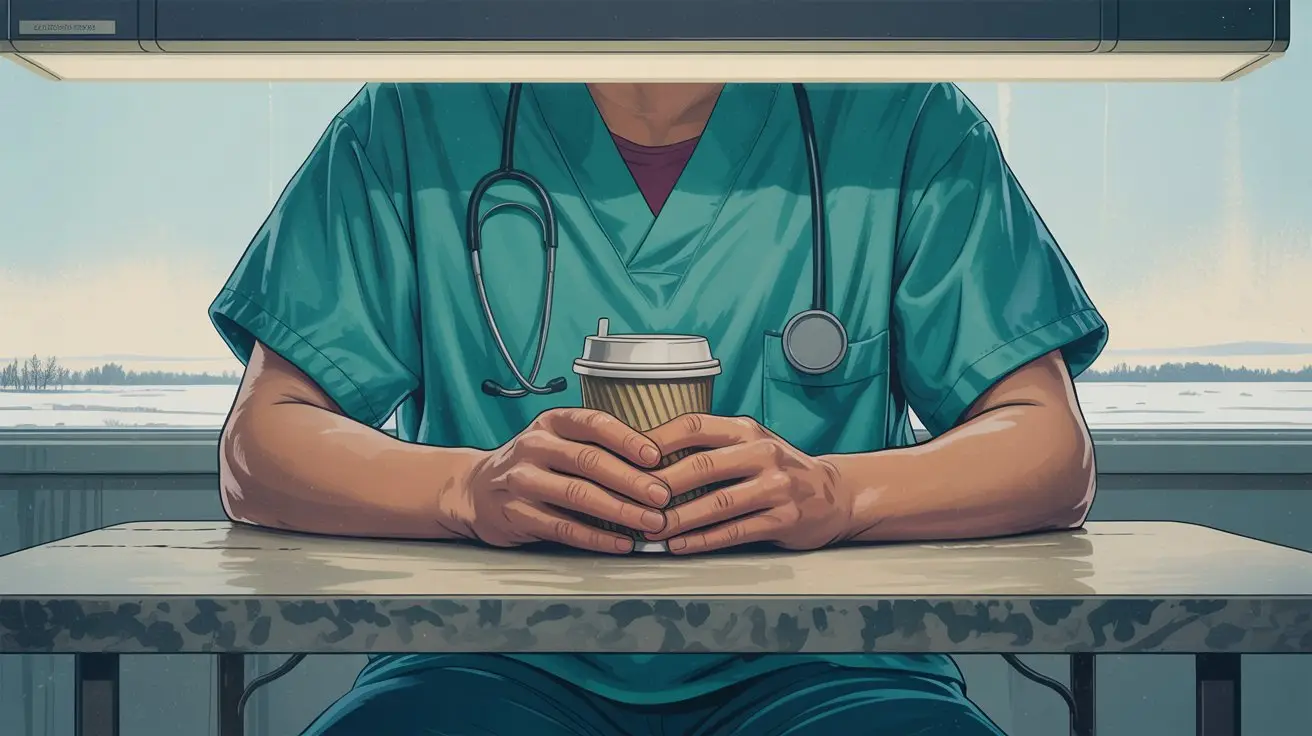
TL;DR: A 2025 Saskatchewan Union of Nurses survey found that 53% of registered nurses have considered leaving the profession entirely — not for better pay or a different hospital, but for a completely different career. Nationally, research shows burnout rates between 79% and 89% among Canadian healthcare workers depending on the study and profession. These numbers aren’t abstractions. If you’re a nurse, paramedic, therapist, or healthcare worker in Saskatchewan reading this because something feels different now — heavier, flatter, harder to shake — this article is for you. What you’re experiencing has a name, a well-understood mechanism, and a recovery pathway.
What did the 2025 Saskatchewan nursing survey actually find?
In September 2025, the Saskatchewan Union of Nurses (SUN) released survey results from approximately 1,800 registered nurses across the province. The findings were stark.
Roughly 53% of respondents reported they had thought about leaving nursing altogether for a different career in the past year. Not transferring hospitals. Not switching specialties. Leaving entirely. SUN president Bryce Boynton called the numbers a warning that the province risks an even deeper staffing crisis if conditions don’t change.
The staffing picture was equally grim. About 82% of respondents said they had witnessed patients put at risk because of staffing shortages in the past year. More than 90% reported that short-staffing led to longer wait times, service disruptions, and delayed or missed assessments and treatments.
These aren’t projections. They’re descriptions of what’s already happening in Saskatchewan hospitals and clinics — from Saskatoon and Regina down to rural facilities that are regularly closing or going on bypass because there simply aren’t enough nurses to keep them open.
Clinical insight: When more than half of a professional workforce is actively considering leaving, we’re not looking at individual burnout cases. We’re looking at a system-wide pattern of occupational injury. The distinction matters, because it means your exhaustion isn’t a personal failing — it’s a predictable response to unsustainable conditions.
Why is healthcare worker burnout so severe in Saskatchewan right now?
The SUN survey didn’t emerge in a vacuum. Saskatchewan’s healthcare system has been under compounding pressure for years, and several factors have converged to make 2025 particularly brutal for the people working inside it.
Chronic understaffing that predates the pandemic. Rural facilities across the province have been struggling with nursing vacancies for over a decade. Emergency room closures in smaller communities have become routine — not exceptional. The Saskatchewan Association of Rural Municipalities has been formally lobbying the province about healthcare staffing since well before COVID-19. The government’s own data shows that while the nursing workforce has grown to approximately 12,400 (up from roughly 10,000 in 2018), demand has grown even faster, and many of those positions remain chronically vacant in rural and northern regions.
Mandatory overtime and coerced extra shifts. SUN reported that nurses at facilities including Regina General Hospital were being pressured into excessive overtime to cover gaps — to the point that it was affecting their ability to provide safe care. When your “day off” routinely becomes another shift, recovery doesn’t happen. The stress cycle never completes. This is one of the fastest pathways to clinical burnout.
The moral weight of knowing patients are at risk. When 82% of nurses say they’ve seen patients endangered by staffing shortages, that’s not just a workload problem. That’s moral injury — the psychological damage that occurs when you’re forced to participate in or witness situations that violate your professional ethics and values. You became a nurse to help people. When the system prevents you from doing that safely, the injury cuts deeper than fatigue.
Geographic isolation compounds everything. In northern Saskatchewan — communities like La Ronge, Stony Rapids, and Sandy Bay — healthcare workers often serve as the only clinical presence for vast geographic areas. When you can’t hand off to a colleague because there is no colleague, and the nearest backup is hours away, the weight of that responsibility accumulates differently than it does in an urban centre with a full staffing complement.
Is this burnout, compassion fatigue, or moral injury — and does it matter?
These terms get used interchangeably, but they describe different mechanisms. Understanding which one (or which combination) is driving your experience changes what recovery looks like.
Burnout is the result of chronic workplace stress that hasn’t been successfully managed. It shows up as three interconnected patterns: emotional exhaustion (you’re running on empty), depersonalisation (you’re emotionally distancing from patients and colleagues — sometimes without realising it), and reduced personal accomplishment (the work that used to feel meaningful now feels hollow or pointless). The World Health Organization classifies burnout as an occupational phenomenon — not a personal weakness.
Compassion fatigue is specific to caring professions. It’s the gradual erosion of your capacity for empathy after prolonged exposure to others’ suffering. If you notice that you’ve become more cynical about patients, that stories of pain don’t land the way they used to, or that you feel numb where you once felt compassion — that’s the signature of compassion fatigue. Research consistently shows a significant positive relationship between compassion fatigue and moral injury in nursing populations.
Moral injury is what happens when you’re repeatedly forced to act against your own values or witness events that violate your sense of right and wrong — often because of systemic constraints you can’t control. Unlike burnout (which is about depletion) or compassion fatigue (which is about empathy erosion), moral injury is about damage to your sense of identity and integrity as a healthcare professional.
Why this matters for recovery: Burnout responds well to workload restructuring, boundary-setting, and stress-cycle completion. Compassion fatigue benefits from targeted empathy restoration and processing of secondary trauma. Moral injury requires a different therapeutic approach — one that addresses the values-violation directly and helps rebuild a coherent professional identity. Many healthcare workers are dealing with all three simultaneously. A generic “self-care” prescription won’t touch the moral injury component. This is why specialised assessment matters.
What does healthcare worker burnout actually look like day to day?
The clinical literature describes burnout in neat categories. In real life, it’s messier. Here’s what healthcare workers in Saskatchewan typically describe when they come through our door:
You dread your shifts in a way that feels different from normal work reluctance. Not just “I’d rather have the day off.” More like a visceral, gut-level resistance. Nausea in the parking lot. Sitting in your car for twenty minutes before walking in. Counting down to retirement that’s still fifteen years away.
Your off-time doesn’t restore you. You get three days off and spend the first one recovering from the last stretch, the second one anxious about the next one, and the third one already bracing. The math never works out. You’re never actually resting — you’re just waiting for the next shift.
You’ve become someone you don’t recognise. Snapping at your kids. Pulling away from your partner. Making dark jokes about patients that would have bothered you a few years ago. Drinking more, sleeping less, caring less. If someone asked “are you okay?” you’d say yes automatically — and mean it, because this version of normal has been building for so long you’ve lost the reference point for what “okay” actually is.
You’re making small errors you wouldn’t have made before. Charting mistakes. Forgotten follow-ups. Slower reaction times. Not because you’re careless, but because your cognitive resources are genuinely depleted. This is one of the most distressing aspects of healthcare burnout — the fear that your exhaustion could hurt someone.
You’ve stopped advocating. You used to flag concerns, push for better staffing, speak up in team meetings. Now you don’t bother. Not because you’ve stopped caring, but because the repeated experience of raising concerns that go nowhere has taught your nervous system that advocacy is futile. This is learned helplessness — and it’s one of the clearest markers that burnout has moved from acute to entrenched.
How do the national numbers compare?
Saskatchewan’s survey findings sit within a broader national pattern that’s been building since the pandemic and shows no signs of reversing.
A 2024 cross-sectional study published in BMC Public Health found that 78.7% of Canadian public health workers met criteria for burnout using the Oldenburg Burnout Inventory. Nearly half reported being harassed because of their work during the pandemic (Singh et al., 2024; DOI: 10.1186/s12889-023-17572-w).
A study of 1,029 Canadian healthcare workers found that nurses experienced the highest self-reported burnout rate at 89.5% during the COVID-19 pandemic — higher than physicians (75.7%) or other healthcare professionals (84.5%) (Liu et al., 2024; DOI: 10.1080/20008066.2024.2351782).
A 2025 study out of the University of Saskatchewan’s School of Public Health, analysing data from Statistics Canada’s Survey on Healthcare Workers’ Experiences During the Pandemic, found that 25% of the 12,139 healthcare workers surveyed expressed intent to leave their current job — and among those, 44% cited stress or burnout as the primary reason (Orr et al., 2025; DOI: 10.1186/s12913-025-12522-1).
A Canadian Federation of Nurses Unions survey found that more than half of all nurses were contemplating leaving their position within the next year, with burnout (57%) cited as the primary reason — followed by inability to provide adequate care (45%) and insufficient staffing (43%).
The pattern is clear: This isn’t a few overwhelmed individuals. It’s a workforce in distress. And the people most at risk are exactly the people the system can least afford to lose.
What makes healthcare burnout different from other professional burnout?
I work with executives, lawyers, founders, and other high-performing professionals navigating burnout. Healthcare worker burnout shares some of the same mechanisms — chronic overload, perfectionism, identity fusion with work — but it has features that make it distinct and, in many cases, more damaging.
You can’t just “unplug.” An executive who’s burning out can, in theory, delegate, take leave, or restructure their workload. A nurse in a short-staffed unit can’t leave a patient unmonitored to take a mental health break. The inability to disengage when you need to is a burnout accelerator that most other professions don’t face at the same intensity.
The stakes are non-negotiable. A missed email in a corporate setting is an inconvenience. A missed medication or delayed assessment can be life-threatening. The constant awareness that your fatigue could translate into patient harm creates a layer of hypervigilance that compounds exhaustion.
Shift work disrupts the biological foundations of resilience. Rotating shifts — especially 12-hour rotations and night work — suppress melatonin, fragment sleep architecture, and dysregulate cortisol rhythms. These aren’t just “tiredness.” They’re neurobiological disruptions that impair emotional regulation, cognitive flexibility, and immune function. You’re trying to recover from burnout on a physiological platform that’s been compromised by the schedule itself.
The helping identity makes it harder to ask for help. Healthcare workers are socialised into a culture of self-sacrifice. Admitting you’re struggling can feel like a professional betrayal — especially in a system that’s already understaffed and relying on everyone to hold things together. This is why healthcare workers so often delay seeking support until burnout is severe.
What should you actually do if you recognise yourself in this article?
If the patterns described here sound familiar, here’s what the evidence and clinical experience suggest — in order of priority.
First, stop treating this as a willpower problem. Burnout isn’t caused by insufficient resilience, and it isn’t fixed by trying harder. If you’ve been telling yourself you just need to push through, take a vacation, or develop a better attitude — and it isn’t working — that’s not because you’re not trying hard enough. It’s because the intervention doesn’t match the problem.
Second, get assessed properly. Healthcare worker burnout overlaps with depression, anxiety, PTSD, and adjustment disorders. It also commonly co-occurs with compassion fatigue and moral injury, each of which requires a different therapeutic approach. A proper assessment maps which of these mechanisms are active, how severe the burnout has become, and what recovery needs to prioritise first. At jubilant-briars-238591.1wp.site/, we offer a specialised burnout assessment specifically designed for healthcare workers — not a generic stress questionnaire, but a clinically informed evaluation that accounts for the unique pressures of shift work, moral injury, compassion fatigue, and the specific dynamics of working in Saskatchewan’s healthcare system.
Third, address the physiology, not just the psychology. Burnout lives in the body as much as the mind. Sleep architecture repair, nervous system regulation, and stress-cycle completion are foundational — not optional add-ons. If your sleep is fragmented by shift rotations, that’s not a lifestyle issue; it’s a treatment target.
Fourth, consider whether the system change you need is internal, external, or both. Some healthcare workers recover best by learning to work differently within their current role — better boundaries, more effective stress management, targeted processing of moral injury. Others need to change their work environment, reduce hours, shift to a different care setting, or take a structured leave. A good therapeutic process helps you figure out which changes will actually move the needle, rather than just rearranging the same unsustainable pattern.
Frequently asked questions
How do I know if I’m burnt out or just tired from a tough stretch?
The key distinction is recovery. After a hard stretch, rest restores you — a few good sleeps, a long weekend, and you feel more like yourself. With burnout, rest doesn’t reset the system. You come back from time off feeling almost as depleted as when you left. If you’ve been telling yourself “I just need a break” for more than a few months, and the breaks aren’t helping, burnout is the more likely explanation.
Is burnout in healthcare workers actually getting worse, or are we just talking about it more?
Both. Awareness has increased, which is positive. But the data consistently shows that burnout prevalence in Canadian healthcare has worsened since the pandemic, not improved. A 2024 study found burnout rates of nearly 79% among Canadian public health workers. The 2025 SUN survey showing 53% of Saskatchewan nurses considering leaving the profession entirely suggests that conditions on the ground are still deteriorating — or at best, not meaningfully improving despite recruitment efforts.
Can I recover from burnout without leaving healthcare?
Yes — many people do. Recovery doesn’t necessarily mean leaving your profession. It often means changing your relationship to it: addressing the specific mechanisms (moral injury, compassion fatigue, chronic stress-cycle incompletion) that are driving your symptoms, building more effective boundaries, and in some cases advocating for or pursuing structural changes to your working conditions. What recovery does require is honest assessment and targeted intervention — not just waiting it out.
What about employee assistance programs (EAPs)?
EAPs can be a useful starting point, particularly for short-term crisis support. Where they tend to fall short is in the depth and specificity of treatment. Most EAP sessions are limited in number, and the counsellors, while competent, may not have specialised training in healthcare burnout, moral injury, or the specific dynamics of nursing and shift-work-related depletion. If your EAP sessions help, that’s great — but if you find yourself feeling like the provider doesn’t fully understand the realities of your work, a specialist may be a better fit.
Is burnout covered by Saskatchewan benefits or insurance?
Most extended health benefits in Saskatchewan cover registered clinical counsellors, psychologists, and social workers. If your burnout meets criteria for a related diagnosis (such as adjustment disorder or major depressive episode), treatment may also be covered under short-term or long-term disability provisions. It’s worth checking your specific plan — and worth noting that early intervention is almost always more effective (and less costly) than waiting until you need a disability claim.
You didn’t sign up for this — and you don’t have to white-knuckle through it
You went into healthcare to help people. Nobody warned you that the system itself might be the thing that grinds you down.
The numbers in the SUN survey aren’t just policy talking points. They’re a reflection of what thousands of Saskatchewan nurses and healthcare workers are carrying every shift — the exhaustion, the guilt, the sense that things aren’t going to get better, the quiet question of whether you can keep doing this.
You’re not weak for feeling that way. You’re having a normal response to an abnormal level of sustained occupational stress. The research is unequivocal on this.
If you’re a nurse, paramedic, physician, therapist, or allied health worker in Saskatchewan and this article hits close to home, you deserve support that’s designed around your specific experience — not generic wellness advice from someone who’s never worked a double shift or been told to do more with less.
Book your healthcare worker burnout assessment
At jubilant-briars-238591.1wp.site/, we offer a specialised burnout assessment specifically for healthcare workers. This isn’t a generic questionnaire — it’s a clinically informed evaluation that accounts for the unique mechanisms of healthcare burnout, including compassion fatigue, moral injury, shift-work disruption, and the specific staffing realities in Saskatchewan.
You don’t need to have it all figured out before you reach out. You just need to be honest about where you’re at.
→ Book your confidential healthcare worker burnout assessment
Virtual appointments available across Saskatchewan — including northern and remote communities.
Research References
Orr, T., Cheung, E., Saha, M., Balogun, T., Feng, C., & Farag, M. (2025). Identifying risk factors for burnout-driven turnover in Canadian healthcare workers during the COVID-19 pandemic. BMC Health Services Research, 25, 469. DOI: 10.1186/s12913-025-12522-1
Singh, J., Poon, D. E.-O., Alvarez, E., et al. (2024). Burnout among public health workers in Canada: A cross-sectional study. BMC Public Health, 24, 48. DOI: 10.1186/s12889-023-17572-w
Liu, N., Plouffe, R. A., Liu, J. J. W., Nouri, M. S., Saha, P., Gargala, D., Davis, B. D., Nazarov, A., & Richardson, J. D. (2024). Determinants of burnout in Canadian health care workers during the COVID-19 pandemic. European Journal of Psychotraumatology, 15(1), 2351782. DOI: 10.1080/20008066.2024.2351782
Balakrishnar, K., Long, B. S., Haritos, A. M., Formuli, E., & Nowrouzi-Kia, B. (2025). Factors associated with intent to leave and burnout among Canadian nurses amidst the COVID-19 pandemic. Canadian Journal of Nursing Research, 57(3), 448–459. DOI: 10.1177/08445621251338580
Saskatchewan Union of Nurses. (2025). SUN member survey results: Burnout and staffing shortages. sun-nurses.sk.ca
Canadian Federation of Nurses Unions. (2022). CFNU member survey summary report. nursesunions.ca